By Jennifer Teegarden, Cooperative Forest Management Program outreach specialist and Woodlands of Minnesota landowner handbook project manager
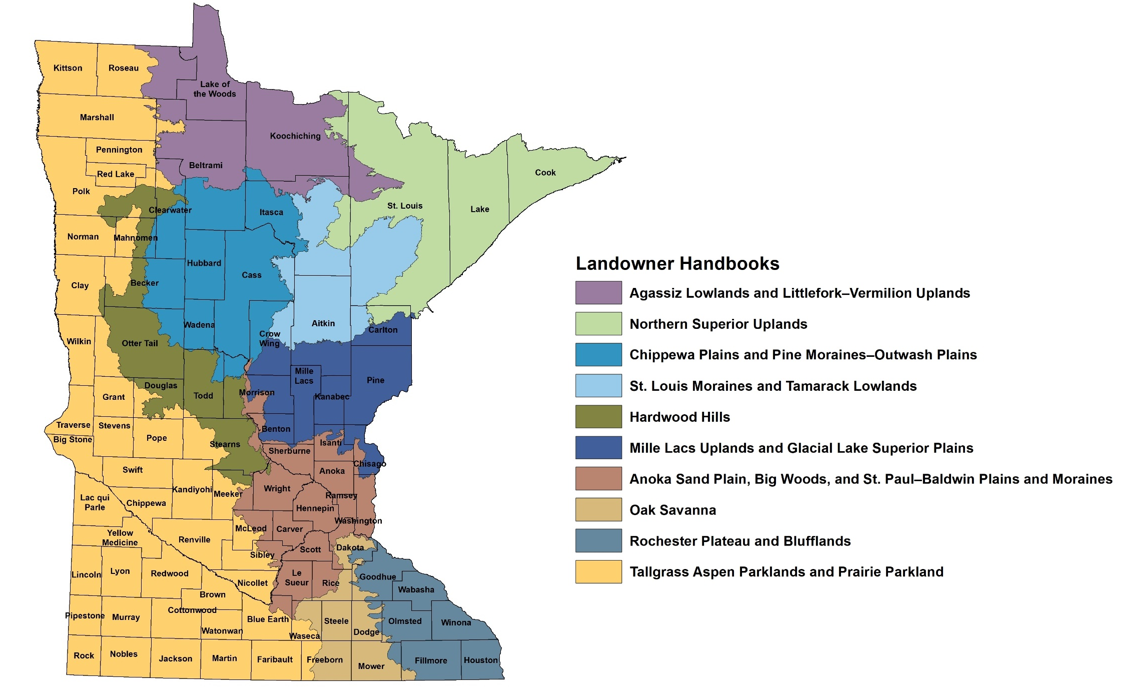
Healthy forests affect all of us. They provide clean water, wildlife habitat, recreation, and forest products. With 44% of Minnesota forests under private ownership, the Private Forest Management Program (PFM) created a series of nine Woodlands of Minnesota landowner handbooks and website to guide and inspire private landowners to keep their forests healthy, according to THEIR local landscape.
Using landowner profiles developed by Tools for Engaging Landowners Effectively (TELE), the landowner handbook series was developed to encourage novice, or “uninvolved,” landowners to become more involved in the management of their woods. According to TELE, these landowners assign low importance to the financial, recreational, and aesthetic benefits of their woods, and thus tend to neglect looking after their woods. However, all landowners—from those who use their woods to supplement income to landowners who use their woods as a retreat—can use these handbooks.
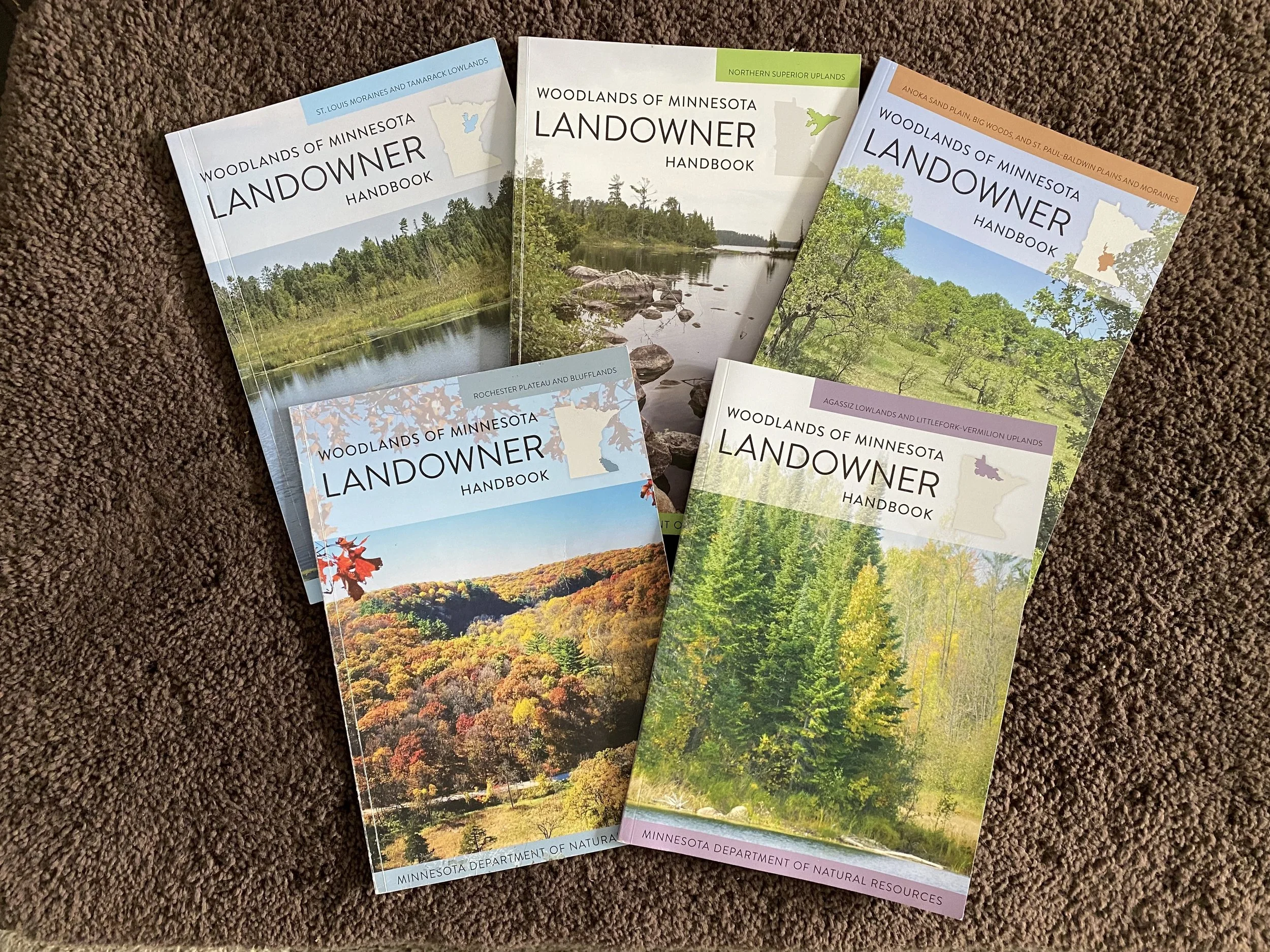
Inspired by the My Healthy Woods handbooks created by the Aldo Leopold Foundation/American Forest Foundation for southeast Minnesota, the DNR created the landowner series for forested regions across the entire state. (Regions are defined by ecological boundaries of specific soil, climate, plant, and animal communities—formally classified as “subsection levels" of the Ecological Classification System.) Each handbook contains geographically relevant information coupled with clear text, engaging images, and inspiring landowner stories called “spotlights.”
To guide a landowner through a woodland project from start to finish, each book:
Introduces the specific region’s socio-ecological history and key forest challenges.
Explains how forests affect the local ecological landscape, community, economy, and the landowner’s personal enjoyment.
Introduces major science-based goals developed by the Minnesota Forest Resources Council as considerations for landowners’ own property goals.
Suggests ways to manage for wildlife habitat, recreation, healthy woods, income, and water quality.
Provides a web of professionals who can deliver technical assistance and information on management activities such as creating a woodland stewardship plan and harvesting.
Provides guidance on financial assistance or tax incentives, enrolling in a conservation easement program, and joining local woodland landowner communities around the state.
Each book contains three “spotlight” interviews of three local woodland owners. The Forest Forager spotlight illustrates how a neighbor landowner might use their woods to make maple syrup, collect mushrooms and berries, or keep bees. The Landowner Leader spotlights neighbors who are actively involved in local organizations such as The Minnesota Women’s Woodland Network, Minnesota Forestry Association, and Minnesota Tree Farm. The Working Woodlands spotlights show how landowners manage their woods to generate income, harvest firewood for wildlife habitat, or produce lumber.
Finally, the books include a paper copy of My Woods Workbook—a guide to evaluate property, set goals, and identify action steps such as setting a timeline and identifying tools and who can help do the work.
With nine books covering the forested part of the state, and one book for the prairie, landowners have a resource to start their journey to actively manage their land for the benefit of all Minnesotans.
If you want a handbook for yourself or need copies to give to landowners, reach out to the DNR Information center at info.dnr@state.mn.us