By Kaitlyn Egan, MNWWN Executive Committee Member, Graduate Student in UMN Duluth’s Indigenous Environmental Systems and Economics Graduate Certificate program
A note: I’m an Executive Committee member and Metro Area Network Lead with the Minnesota Women’s Woodland Network (MNWWN), and I’m grateful to be part of a community of women learning and caring for land together. This blog grew out of one of my 2025 papers for my graduate course, TRES 5100: Foundations of Indigenous Worlds: Worldviews, Knowledge Systems, and Stewardship. It reflects my ongoing effort as a non-indigenous, Minnesota nature-lover to bring together Indigenous knowledge, ecological science, and lived stewardship in a way that feels grounded, respectful, and useful for fellow landowners and practitioners.
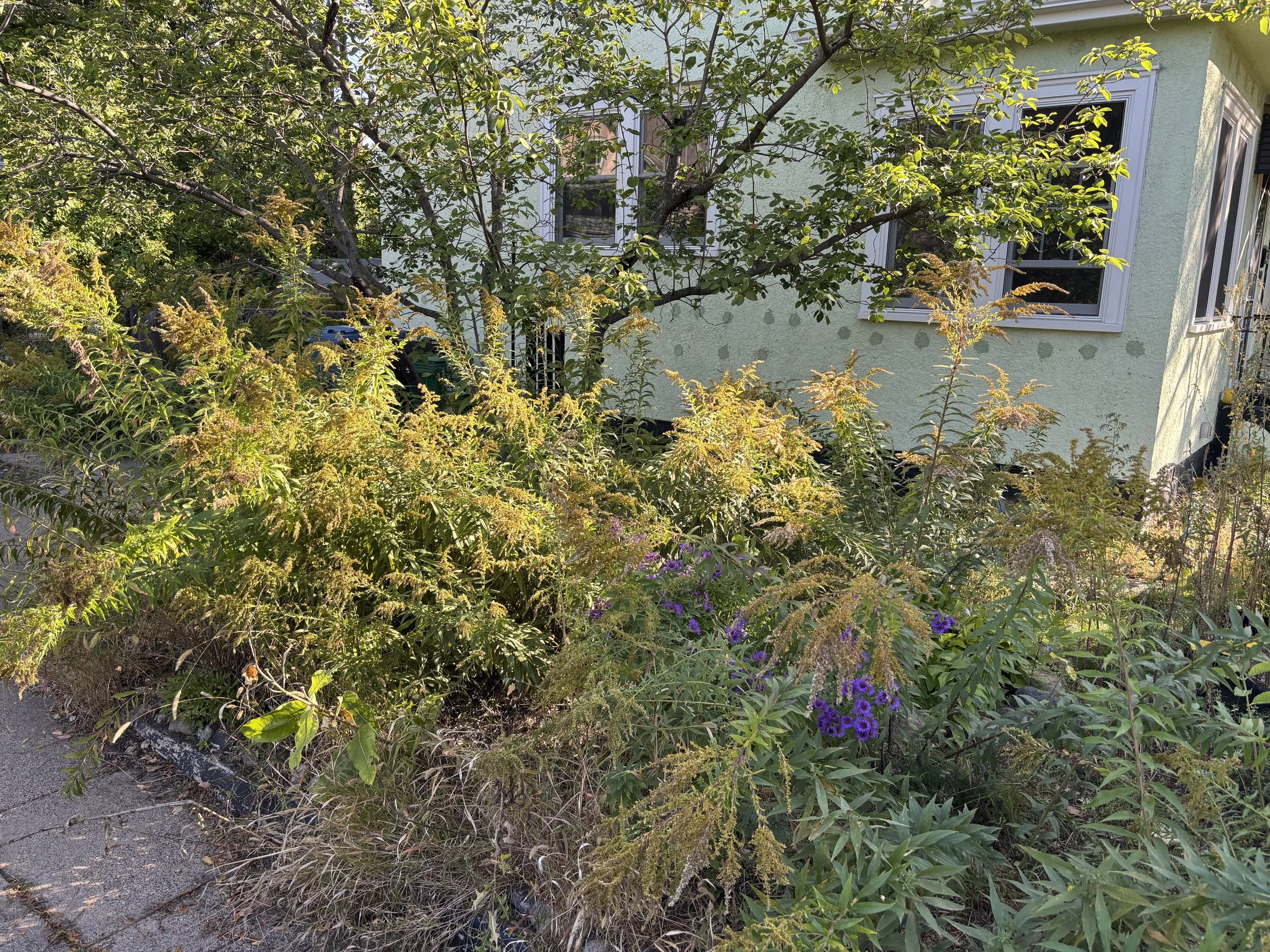
My small yard rests within Bde Óta Othúŋwe (Many Lakes Town), or Northeast Minneapolis, where I live and spend the vast majority of my time (Myles).
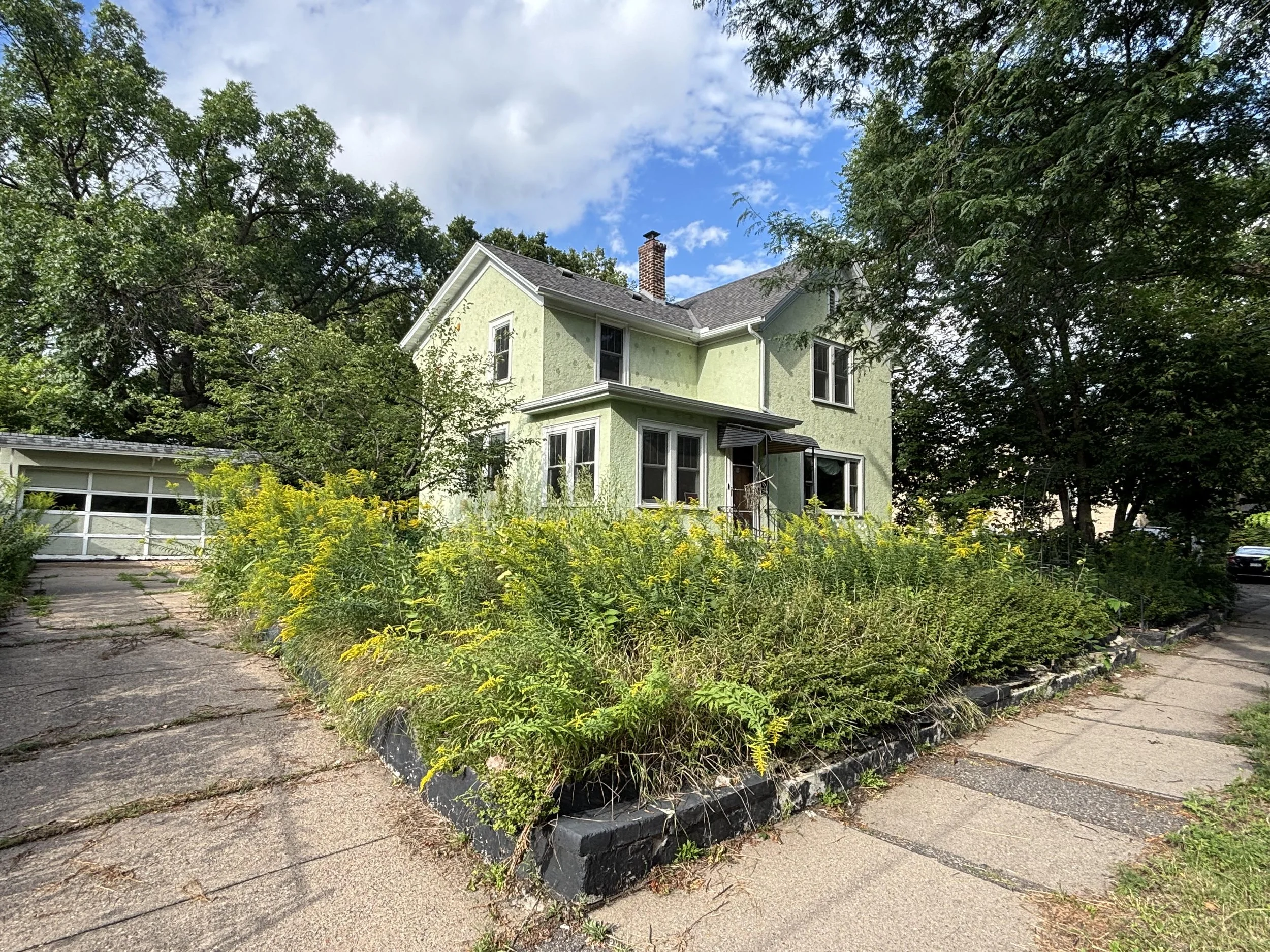
My partner and I purchased and moved to our house in 2017. It’s an irregularly small lot for the neighborhood at .12 acres—a total of 5,167 square feet. Once you subtract the footprint of our house, the paved driveway, and the garage, the nature space is quite small—half the lot, at most. Still, I am continually amazed by the variety of life I find here, and by the ways I can nurture and welcome it. In this paper, I want to reflect on a few aspects of this yard that I believe make it special and give it a character all its own—its relationship to the surrounding neighborhood and ecosystems, the goldenrod that has claimed much of the ground, the chickens that roam freely through it, and the saskatoon tree that keeps the time of the seasons.
Context of This Place
It feels important to ground this reflection in the larger context of where my yard sits. We are just six short blocks east of Wakpá Tháŋka (Large River)—the Mississippi River, north of Owámniyomni (Three Whirlpools)—St. Anthony Falls. More specifically, just above the bend that curves to meet Wíta Wašté (Beautiful Island)—Nicollet Island (Myles). Dakota people once tapped maple trees on the island with carefully carved wooden tappers each spring to make sugar (Gibbs).
Northeast Minneapolis today is known as the city’s arts district, a neighborhood full of walkable streets and gardens, many deliberately featuring native plants. Coupled with the nearby Mississippi River corridor—with its trails, parks, and restoration areas—this creates a patchwork of microhabitats and ecological corridors that support a wide array of plant and animal relatives.
My own lot, though, is a challenging piece of ground. Like much of the neighborhood, the house was built around 1900 on top of urban fill. Nearly every hole I dig turns up debris—concrete, brick, tile, or some other remnant of construction or refuse long past. As a result, the soil is extremely shallow, compacted, and largely impermeable. There is not much to work with, but I have learned to adapt and welcome what can thrive here—which, unsurprisingly, is majority native species.
The lot itself has its own dynamics. The front of the house faces south, while the backyard faces north, tucked between the garage, two-story house, and several tall, mature trees—ash, mulberry, and box elder—along the lot line. The constant interplay of sun and shade shifts not only throughout the day but across the seasons. While the backyard gets limited direct sun, it also benefits from the shelter of those towering trees.
Despite its limitations, one of my favorite aspects of this space is its role as a resting stop for migratory birds and insects. I can trace the arrival of spring by the yellow-rumped warblers, or “butter butts” according to Minnesota Master Naturalist Amy Rager, the first special guests whose brief visit signals the season’s shift. In fall, the visitors are even more varied. Warblers return on their journeys south, joined by other unexpected travelers. This year, the most enigmatic guests were a flock of Nashville warblers, who paused for a week or so to take advantage of the goldenrod—dense with insects and offering plenty of cover.
Fountains of Gold
When we first moved in, I didn’t bother tending to the patchy lawn that came with the house. After the massive pine tree in the front yard was cut down, its roots began to decay, and around the same time a couple of cicada hatches brought a surge of grubs. They quickly ate through the grass roots, leaving behind dead and bare patches. Rather than treating chemically or reseed a traditional lawn, I let the chickens loose for a week to handle the grubs naturally. They ate the grubs, tilled the soil, and added some fertilizer in the process. Afterward, I hand-scattered a pollinator seed mix, then covered it with straw and manure from the chicken coop to nourish the seeds and protect them from wind and hungry birds. Clover, yarrow, and native fescue came up first, attracting small native bees and a variety of other insect life.
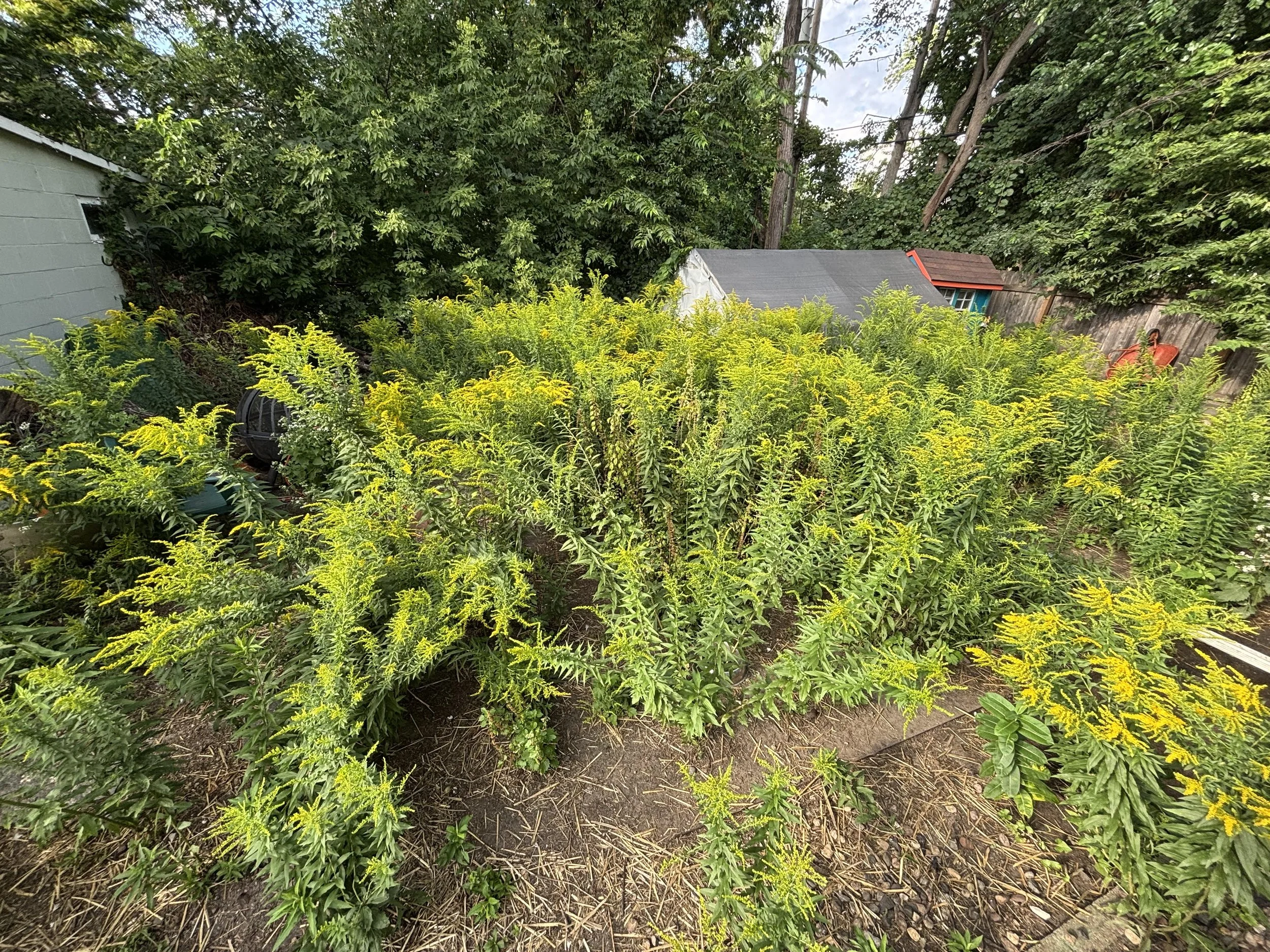
Over the years, waȟčáziblu, the name for goldenrod in Lakota, has increasingly taken hold, and this season it covered nearly the entire yard—front and back (Lakota Made LLC). The towering stalks, some six feet high, swayed and bobbed together like a golden blanket, their fragrant blooms perfuming the whole space with a warm, apple-green scent that to me embodies the season and sunshine itself. For weeks, the yard swirled and pulsed with pollinators, especially bumblebees, whose burrows I’ve spotted tucked beneath the thicket of stems. The largest queen (who defies gravity and physics) I named Beeyoncé, and her tunnel is under a rock bordering the chicken run.
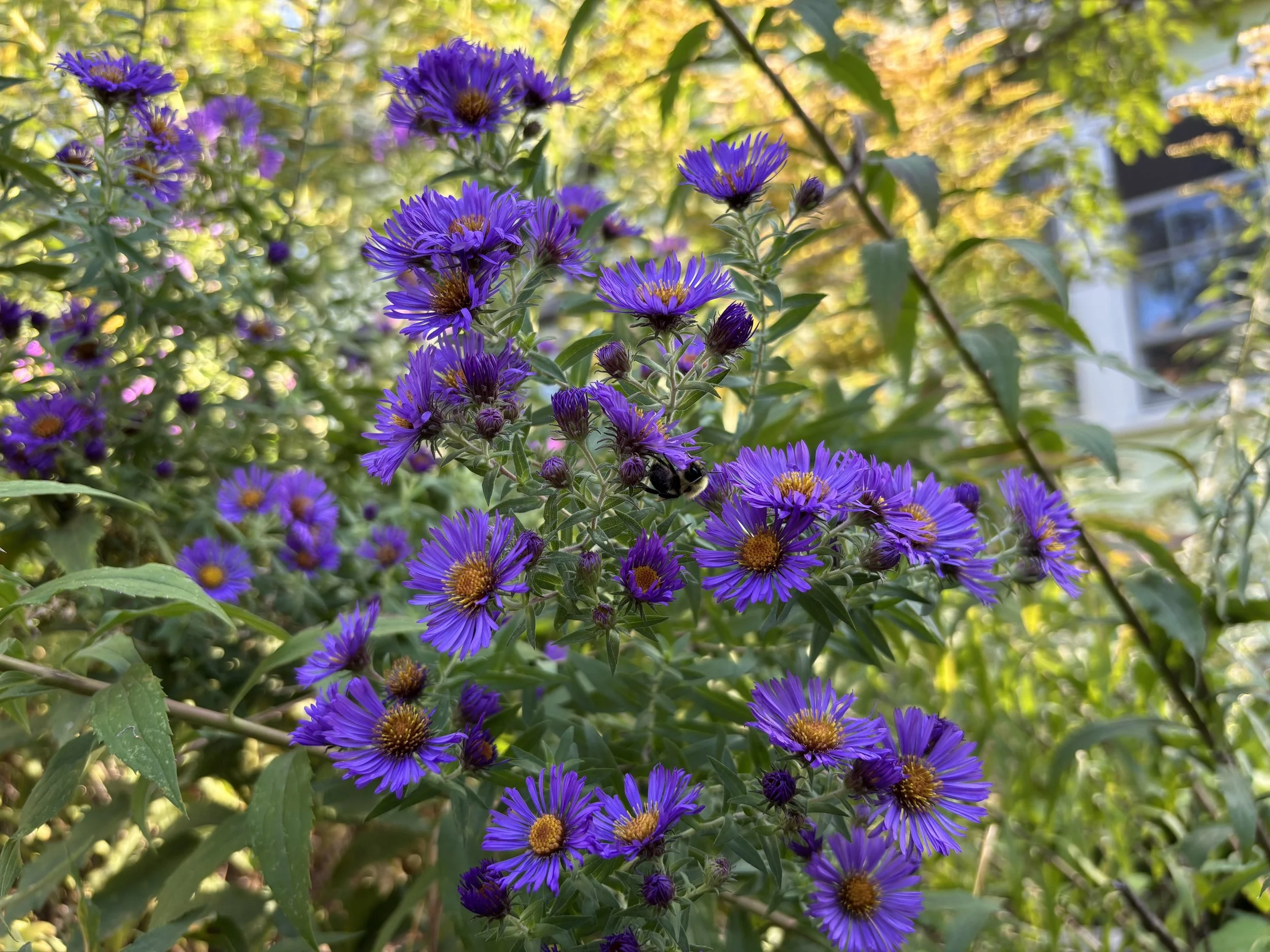
Each year, the goldenrod spreads more densely, bringing both beauty and abundance. I think Potawatomi botanist and author Robin Wall Kimmerer’s description really captures the plant— “a fountain [that jets] bouquets of chrome yellow in dazzling arches of chrysanthemum fireworks”—especially when combined with rich purple asters (Kimmerer, “Braiding Sweetgrass”). I only spotted maybe two pale asters this year, so I’d like to introduce more asters and encourage the floral reciprocity between the two; “Their striking [color] contrast when they grow together makes them the most attractive target… a beacon for bees. Growing together, both receive more pollinator visits than they would if they were growing alone” (Kimmerer, “Braiding Sweetgrass”).
Goldenrod is also good medicine. I’ve learned of its uses for allergies and postnasal drip from multiple sources, and keep the flowers and leaves I’ve dried from my yard on hand. Lakota Indigenous Traditional Herbalist Megan Schnitker is the owner of Lakota Made LLC in Mankato, Minnesota and tells us “the Lakota people have long revered goldenrod for its many uses,” including medicine, dye, food, and ceremony and ritual uses. She instructs to harvest “for ceremonial purposes, gather goldenrod while blooming, after the morning dew dries. Harvest a few days before the full moon” (Lakota Made LLC).
While revisiting sources for this paper, I came across the instruction to “[c]ombine goldenrod with ground ivy, New England aster, and nettle in tea to create an excellent allergy reliever” (Rose 136). It’s a reminder that plant relatives have their own accords, and that by observing their interactions in nature, we can glean these relationships and the benefits they offer. Thus, I discovered that asters can also be used to treat allergies (Rose 191), further highlighting the interconnectedness of these two species.
Generally, I leave the rigid goldenrod stems standing through fall and winter. When I need to clear the yard to make room for us or the dog, I pile and leave the cut stalks to create shelter for native bees to hibernate inside and eventually compost back into the soil. Beneath the goldenrod, mice and voles tunnel and stash seeds, while rabbits, chipmunks, and the occasional raccoon or opossum find cover in the dense growth. It is, in every sense, a jungle—alive, buzzing, sheltering, and endlessly surprising.
“Beware of Tiny Raptors!”
One thing that makes my yard unique is the presence of my free-ranging chickens, which I started keeping in 2021, during a time of food availability worries. I originally got them for eggs—most of which I give away—but they’ve become a source of both food sovereignty, delight, and careful animal husbandry. The hens roam freely in my fenced backyard, scratching, digging, and nibbling through much of the vegetation. Somehow, though, the goldenrod remains immune to their foraging and continues to thrive. In fact, this year’s goldenrod jungle has grown dense enough to offer the chickens excellent shelter from Cooper’s hawks and roaming neighborhood cats.
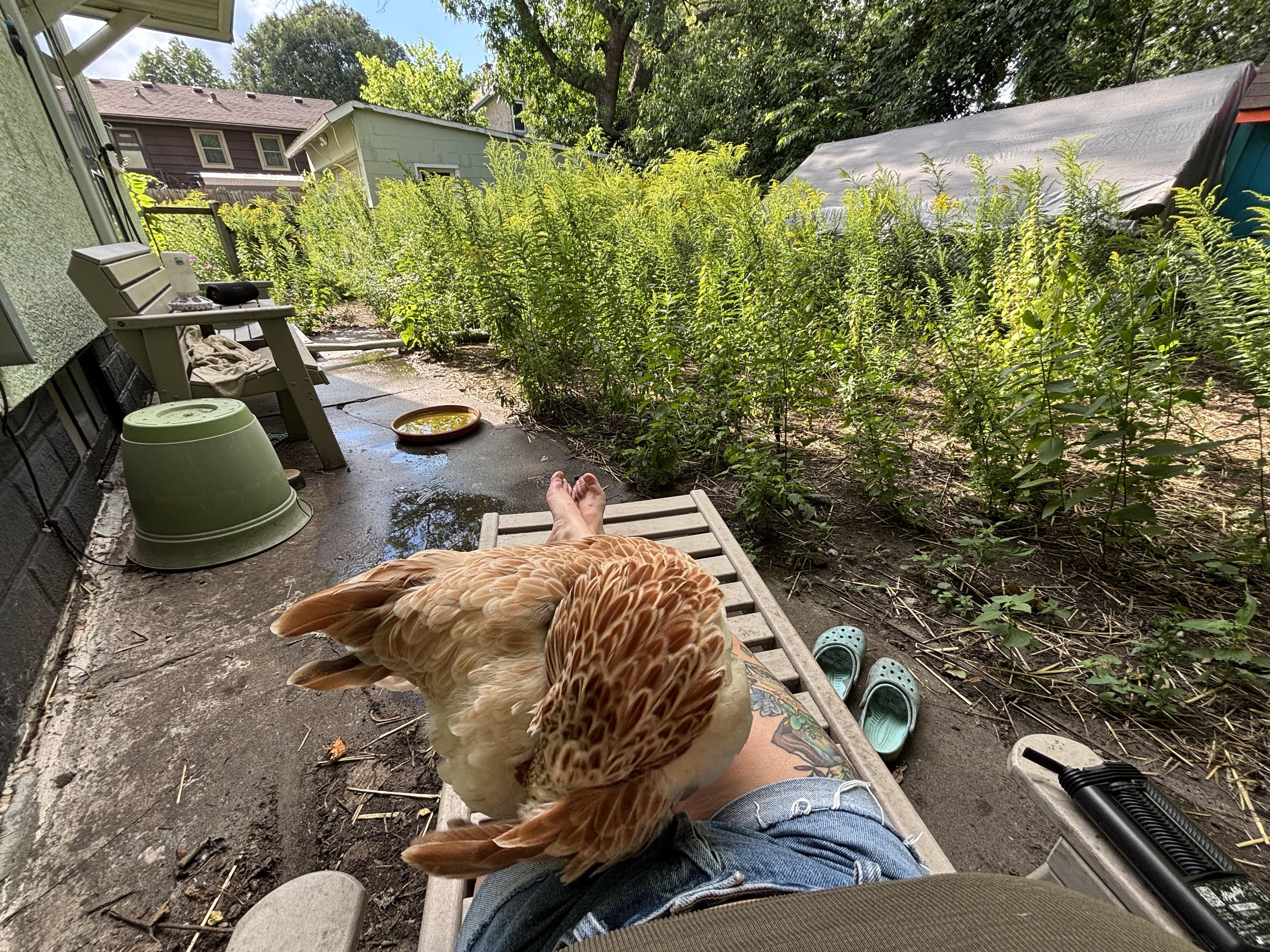
The chickens form an important part of the cycle of life in my yard. They eat many insects and plants that live here, lay nutritious eggs, and in turn I use their straw bedding and manure as fertilizer, spreading it over the soil to enrich it and to help protect bare patches during the muddiest or driest seasons. When I do bigger seasonal cleanouts, I haul the dirty straw and manure a couple blocks down to my neighbor, Cody, who gardens vegetables and flowers. In return, he enthusiastically shares part of his harvest with us, constantly bringing over kale trimmings and other pulled plants as treats for the hens. This little exchange fuels the cycle of nutrients and builds a sense of deep community to the work. Both Cody and I share our yard spaces with each other, feeling the other has some ownership or belonging in each other’s space. They wouldn’t be the same without the other person.
The chickens also help scatter seeds across the yard, which has led to a fluctuating number of volunteer sunflowers. Cody had a massive crop of sunflowers this year and tossed at least twenty heads into the yard for the ladies. With luck, we’ll see even more bright faces turning to the sun in summers to come.
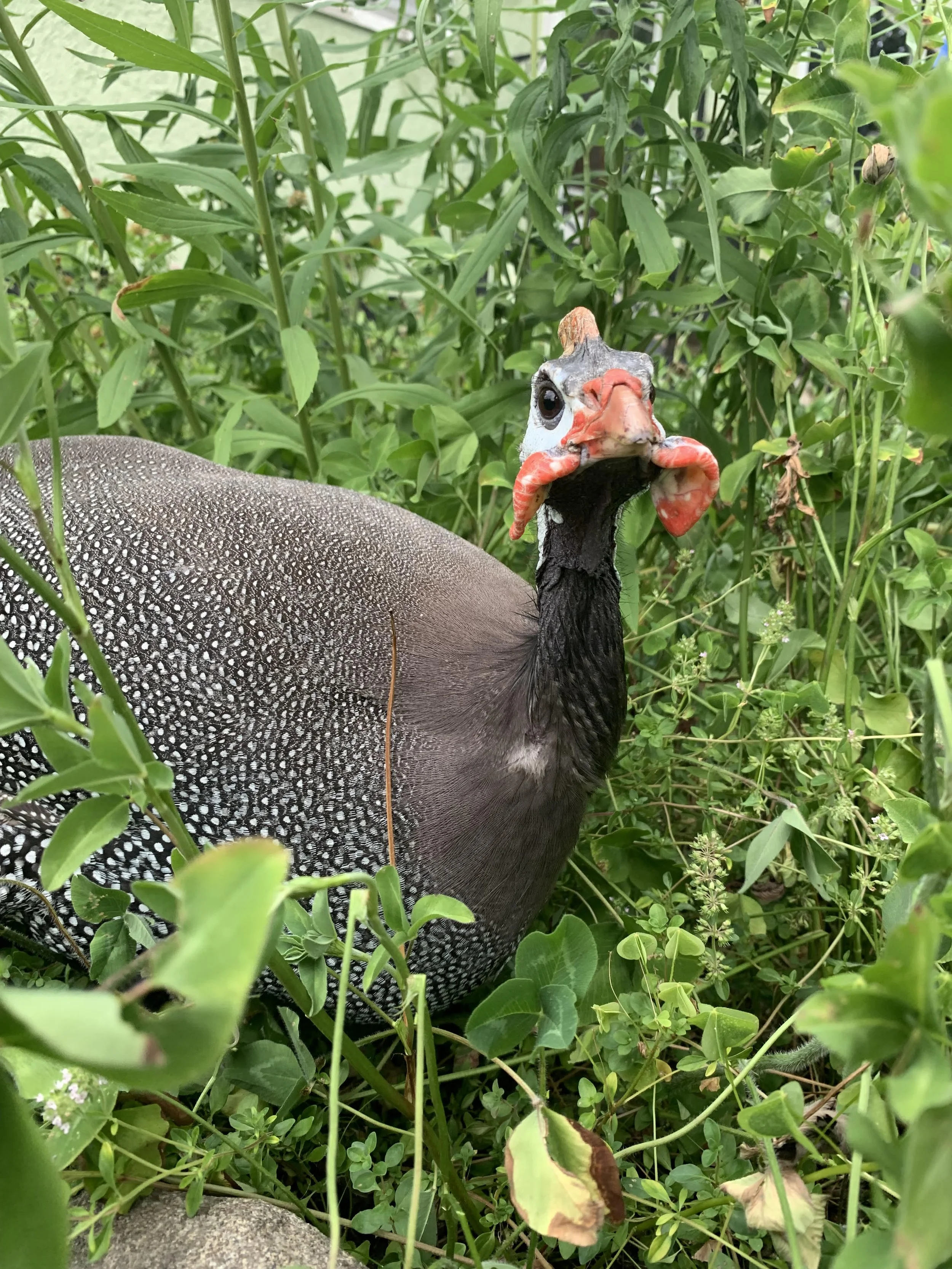
Free-ranging chickens are undeniably happier and healthier, and their eggs are richer and more nutritious. I’ve watched them form a kind of partnership with the neighborhood squirrels, sounding alarms together when hawks circle overhead or a cat sneaks by. Unlike their woodland counterparts, the squirrels here rarely bother to bury their stores; instead, they stash them under awnings or on windowsills. More than once, I’ve discovered bread crusts or even pizza slices tucked inside the run or balanced on the coop windowsill—squirrel offerings, I like to imagine, as payment to their feathered security team (who do not get the trash food). For all their small size, the chickens truly live up to their “tiny raptor” status—quick to warn, quick to adapt, and fully woven into this little urban ecosystem.
Saskatoon: Many Names, Countless Connections
What was likely planted as a simple decorative saskatoon shrub outside the west-facing kitchen window has now grown into a two-story tree. When we first moved in, we removed a deteriorating pine that was leaning toward the house, opening the space to more sun and nutrients. Since then, the saskatoon—which I chose as my name for it to honor its indigenous Cree origin, has quadrupled in height and width.
Kimmerer celebrates this bountiful and generous plant in her book, “The Serviceberry: An Economy of Abundance,” and notes its many names; “Saskatoon, Juneberry, Shadbush, Shadblow, Sugarplum, Sarvis, Serviceberry—these are among the many names for Amelanchier. Ethnobotanists know that the more names a plant has, the greater its cultural importance” (Kimmerer, “The Serviceberry”). I knew some of these names and folklore origins; that “its bloom is a sign that the ground has thawed” (Kimmerer, “The Serviceberry”).
Our saskatoon has grown rapidly, offering whisps of delicate blossoms each spring—though I’ve noticed fewer pollinators visiting them with each passing year. Still, the tree amazes me with its abundance: some years it rests, but in others it produces bucketfuls of berries. It has grown so large that we can no longer reach most of the fruit, leaving plenty for the birds and squirrels who flock to its branches. When conditions are just right, it glows a radiant, velveteen fuchsia in the fall that takes my breath away. Heavy snow and wind have damaged it more than once, so this year I plan to prune it back, both to rejuvenate the tree and to encourage berry growth.
For indigenous people including the Dakota, saskatoons are known as a “calendar plant,” their bloom and fruiting a signal of seasonal change (Kimmer, “The Serviceberry”). The berries were also traditionally used in pemmican, carrying both cultural and nutritional significance. I feel honored to care for this tree, which bridges beauty, memory, sustenance, and heritage all in one.
The saskatoon has become a seasonal marker in my own life. Each June I gather berries for us to eat by the fistful, bake into pastries, or freeze by the gallon for those jammy bursts of sweetness in winter. This year, I tried pickling them as a zippy garnish. A close friend who passed away in 2021 made jam from my best harvest—I still have a few unopened jars I can’t bring myself to open. The berries also nourish bird friends: gray catbirds and, on rare and cherished occasions, cedar waxwings.
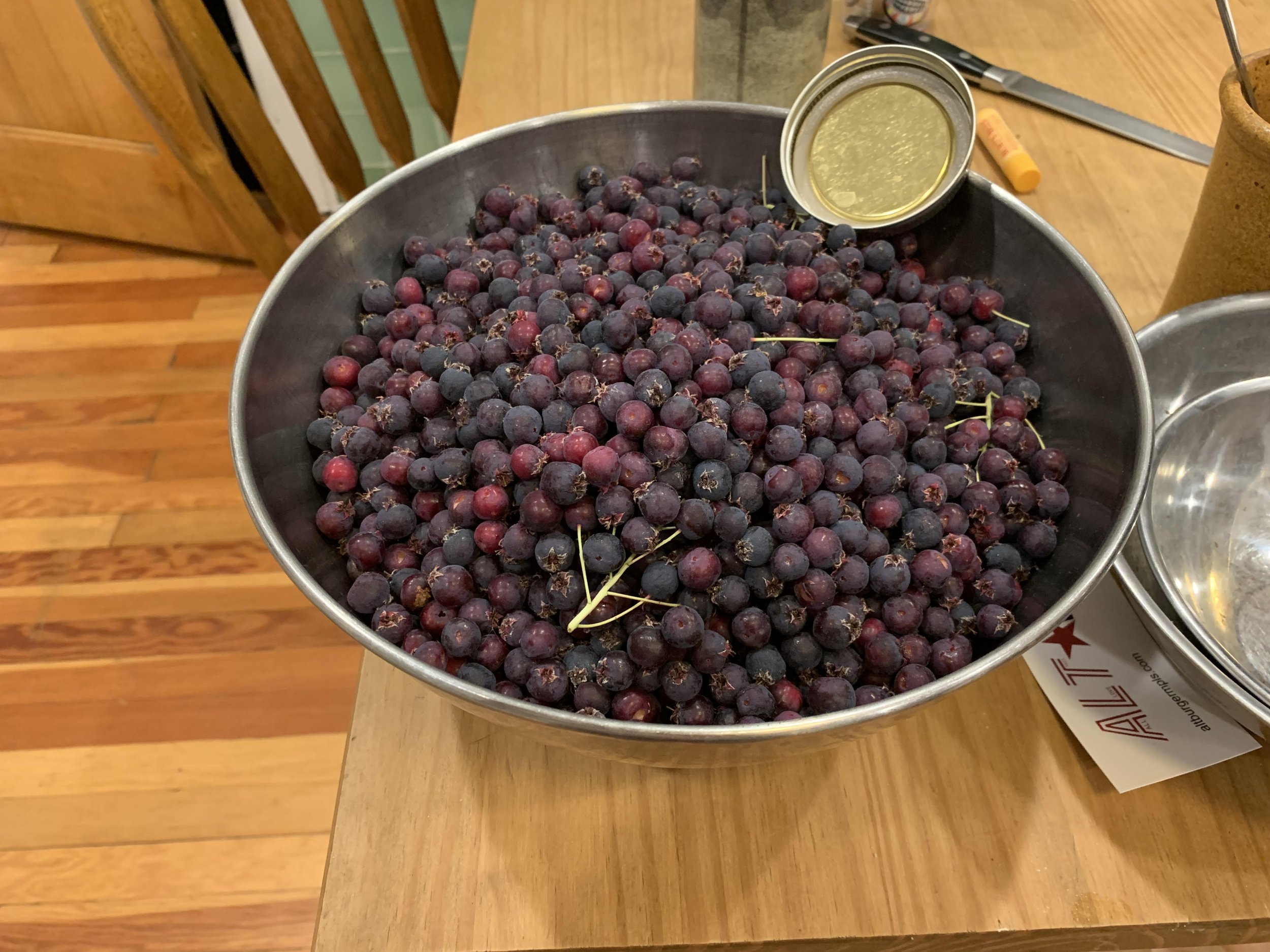
Some berries fall to the ground and sprout into seedlings, which I let grow. My plan is to eventually transplant them north at our cabin, where they can provide shelter and food for wildlife, and us, thus extending the tree’s gifts and reach.
Conclusion
Reflecting on my own experience with this small and specific place, I am reminded that understanding a place—and the knowledge it holds—is a process that unfolds over time and across generations. The deliberate disruption of these connections not only erases culture and history but also diminishes the profound relationships between people and land.
Works Cited
Gibbs Farm: Pathways to Dakota & Pioneer Life. “The answer to this week's #whatisitwednesday is a tree tapping spile. The Dakota people of Ȟeyáta Othúŋwe (Cloud Man's Village) tapped trees at Wíta Wašté (Nicollet Island) every spring in order to make maple sugar. Have you ever participated in tree tapping? #spring #mapletree #minnesotahistory #treetapping.” Facebook, 19 March, 2021, https://www.facebook.com/photo/?fbid=10158935994731830&set=a.235360301829&locale=de_DE.
Kimmerer, Robin Wall. Braiding Sweetgrass: Indigenous Wisdom, Scientific Knowledge and the Teachings of Plants. Milkweed Editions, 2013.
Kimmerer, Robin Wall. The Serviceberry: An Economy of Abundance. Milkweed Editions, 2021.
Lakota Made LLC. “Waȟčáziblu – CanWaȟčáziblu – Canadian goldenrod Did you know it’s scientifically impossible to be allergic to goldenrod? This natural antihistamine blooms at the same time as its cousin ragweed, a proven allergen…” Facebook, 10 September, https://www.facebook.com/LakotaMadeLLC/photos/wa%C8%9F%C4%8D%C3%A1ziblu-canwa%C8%9F%C4%8D%C3%A1ziblu-canadian-goldenroddid-you-know-its-scientifically-impos/1258970646260980/
Myles, Marlena. Westerman, Dawí (translator). Dakhóta Thamákhočhe: Bde Óta Othúŋwe & Imnížaska Othúŋwe. https://marlenamyl.es, 2024.
Rose, Lisa M. Midwest Medicinal Plants: Identify, Harvest, and Use 109 Wild Herbs for Health and Wellness. Timber Press Inc., 2017.