By Kathleen Preece, Executive Director, Minn. Forest Resources Partnership and MNWWN Executive Committee Member
It is one thing to attend a landowner conference and come away from it at the end of the day, knowing a lot more about oak regeneration, and estate planning, and seed collection, and forest management for birds, and growing wild edible plants, and recognizing invasive species and-and-and… It’s another thing to come away feeling like a part of a unique community, like a celebrated disciple of something good, like assuming the role of steward of this Earth.
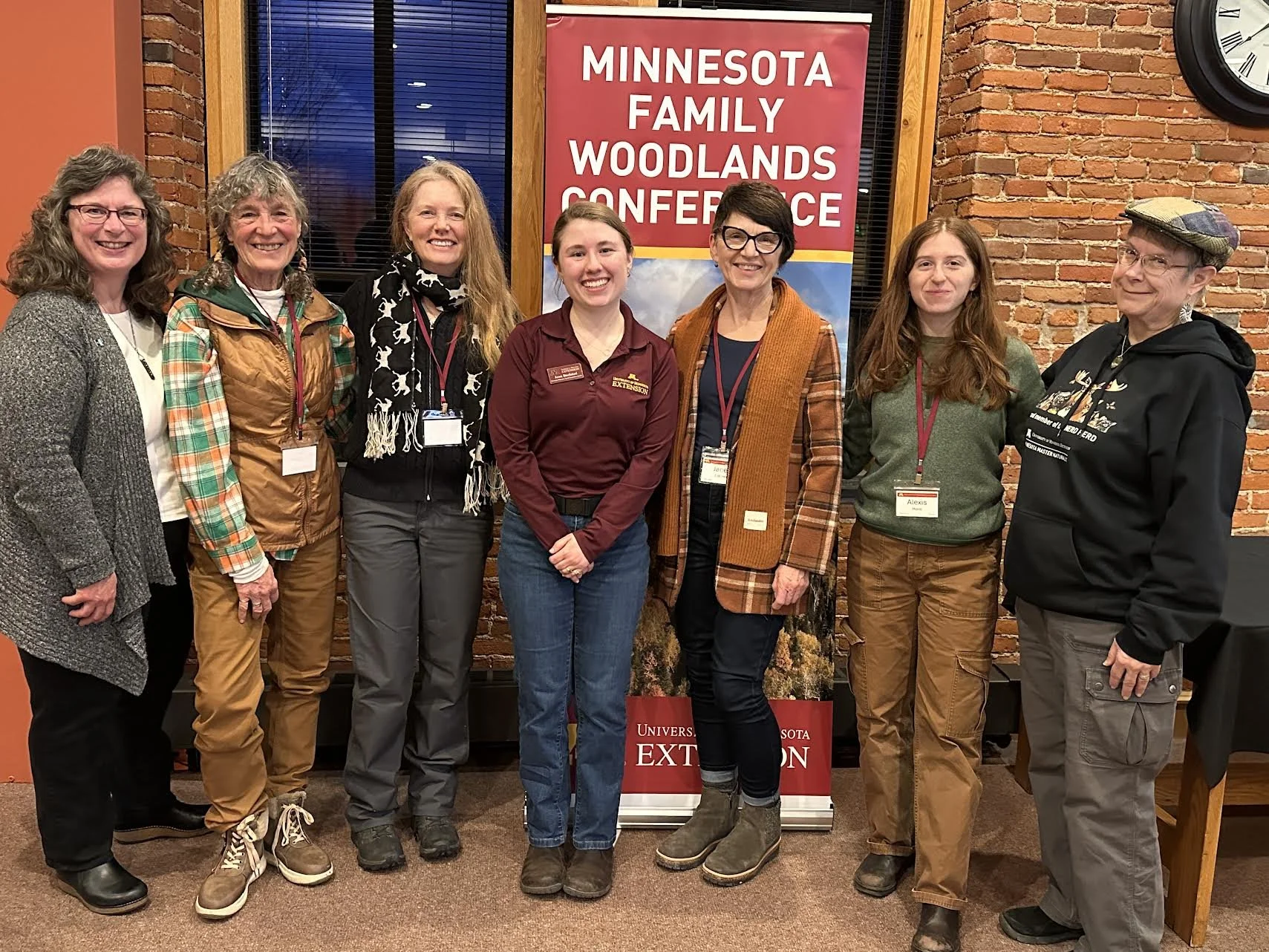
A contingent of MNWWN members participated in the Minnesota Family Woodlands Conference held at Saint John’s University campus March 13-14. Shown, left to right: Barb Spears, Kathleen Preece, Lisa Smiley, Ann Stockstad, Janet Erdman, Alexis Monti, Ginger Kopp. Photo by Mike Erdman
The March 13-14 “Minnesota Family Woodlands Conference” held at Saint John’s University, Collegeville, served more than a plateful of information focused on the care, management, and future planning for privately held woodlands. Eighteen breakout sessions offered conference participants a menu to choose from that satisfied the interests of nearly 200 forest landowners who attended—including a large contingent of MNWWN members.
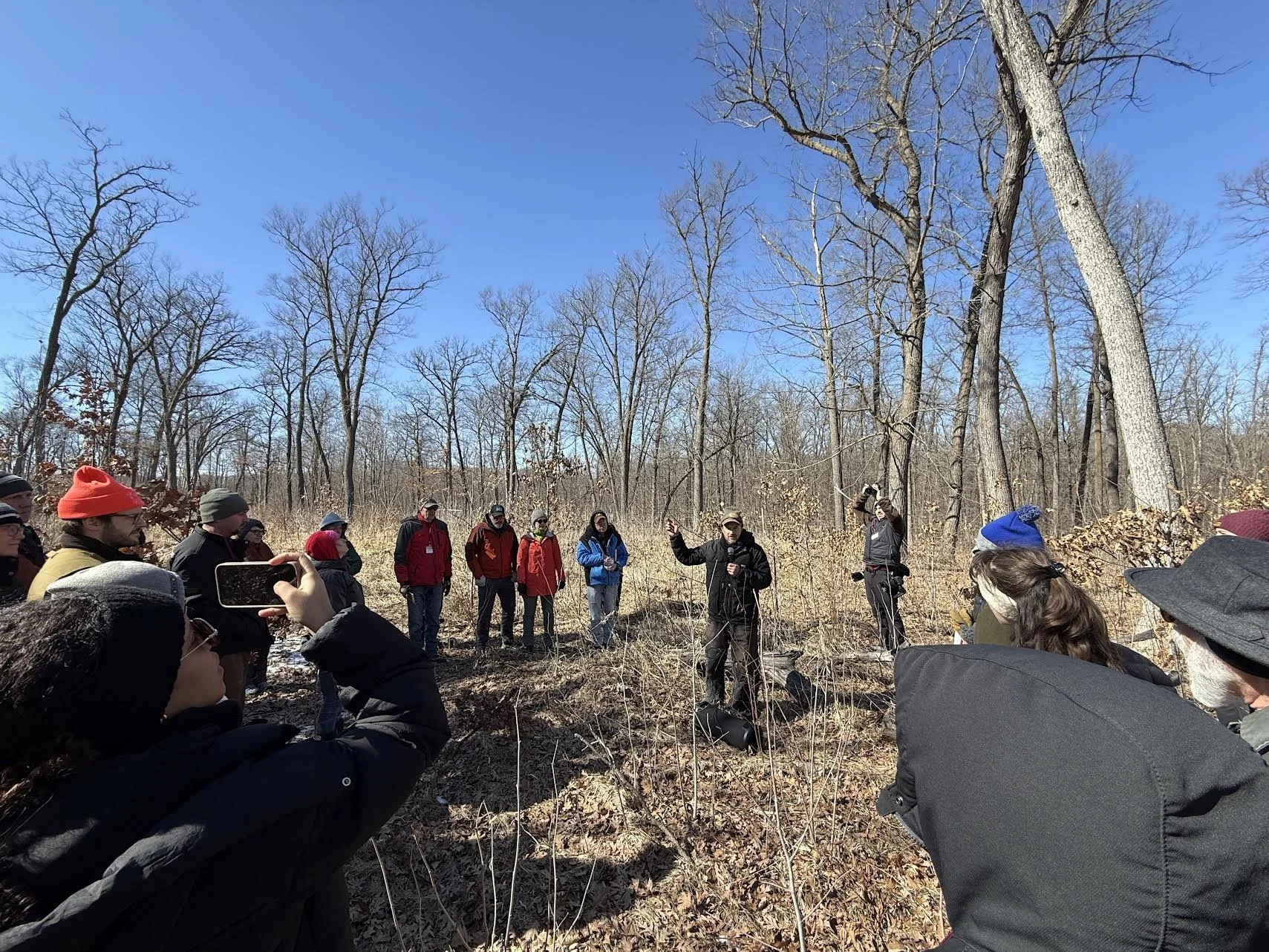
Oak regeneration field tour led by Saint John’s Abbey Arboretum Director John Geisler. Photo by Mary Perala
Field tour opportunities included a wagon trip through the Saint John’s campus highlighting oak regeneration and management. Additional tours included maple syrup production at the on-campus sugar shack, woodworking and sawmill demonstrations, and a tour of the largest wood-fired kiln in North America—another Saint John’s icon.
Conference attendees left gathering filled with something even more than knowledge about owning and managing forested land. As MNWWN’s own, Anna Stockstad expressed in opening remarks at the Friday evening banquet, “Caretaking looks different for all of us. We are a community of woodland stewards. If you want to go far, go together!”
Anna, a University of Minnesota Extension Educator in Forest Ecosystem Health, was instrumental in leading her University of Minnesota Extension team in the planning and execution of the conference, along with her colleague Extension Specialist Eli Sagor, and a plethora of highly competent and engaged volunteers.
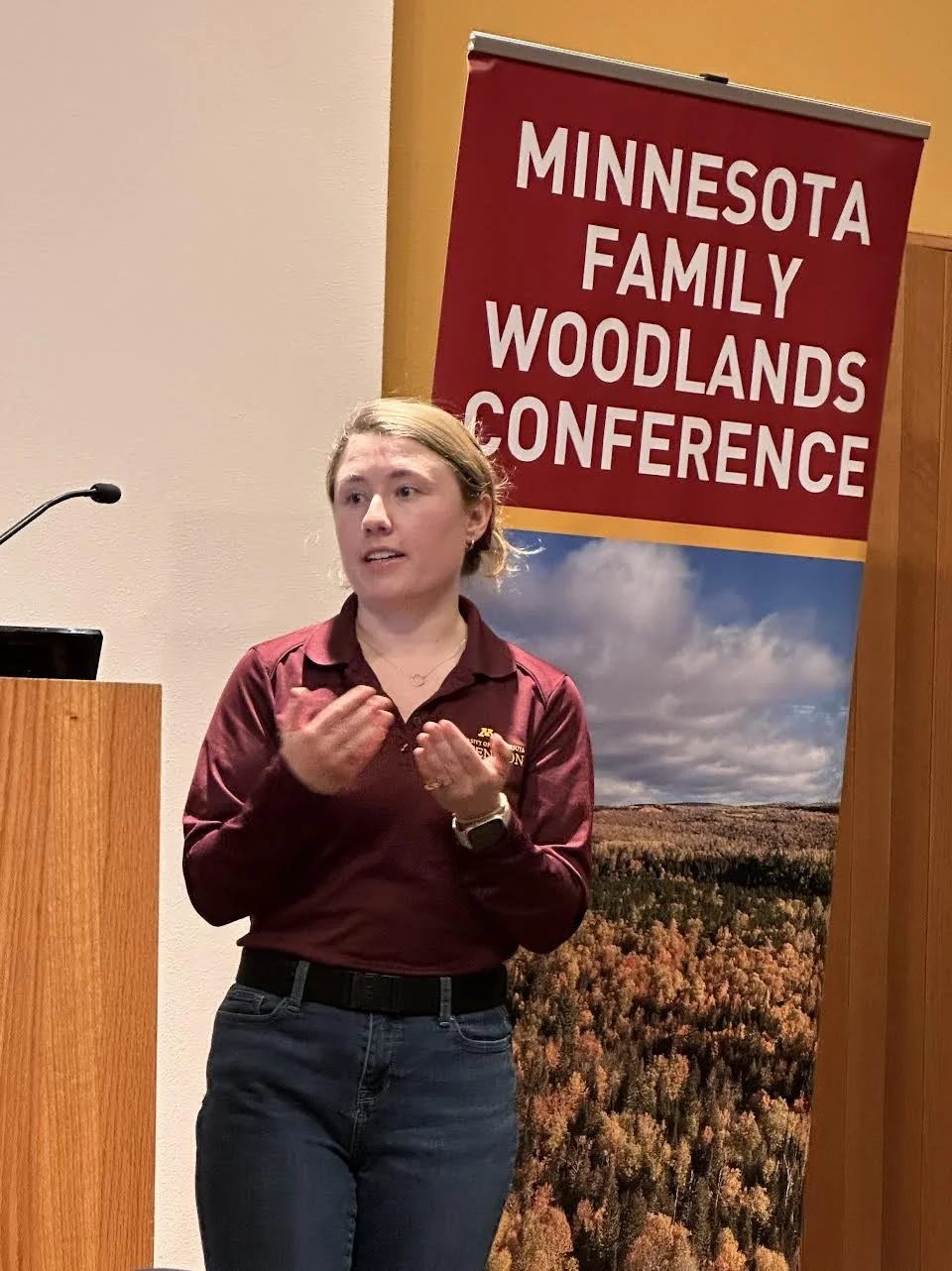
Anna Stockstad opened Friday night’s banquet with inspiring words, looking out on the crowd and stating: “We are a community as woodland stewards.” Photo by Janet Erdman
Ethan Tapper, author of How to Love a Forest and keynote speaker at Friday’s banquet, reinforced Anna’s message that “private landowners are ambassadors.”
“We are not only the greatest threat (to our woodlands), but we are their greatest future and hope,” Ethan attested.
Eli Sagor set the scene for Saturday’s workshops during opening remarks: “You are here for two reasons: To share knowledge: you are teachers! Think of yourselves as experts; you all have stories and experiences to share. Secondly: You are here to foster relationships. This is all about who we are.”
Participating MNWWNers shared ‘who we are’ in a big way! Members Barb Spears and Ginger Kopp ensured the MNWWN display was host to many conference attendees by sharing the MNWWN message and educational materials.
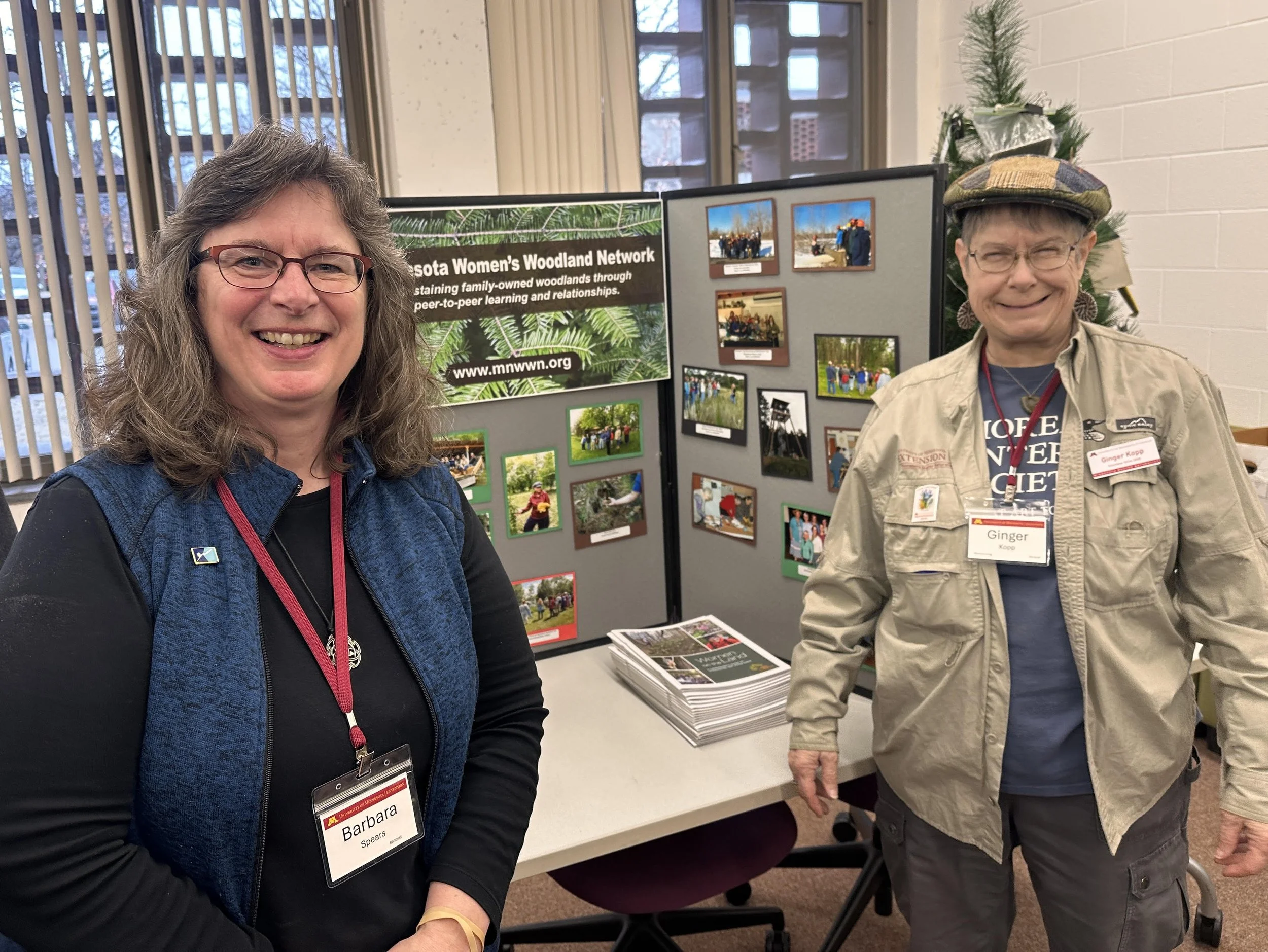
Barb Spears and Ginger Kopp received accolades from visitors to the exhibit hall. It’s been said that they could answer almost any question about woodlands (or find someone who could!)
Thanks to MNWWNer Lisa Smiley, vests, hats, and jackets sporting the MNWWN logo were authentic advertisements. A batch of MNWWNer’s participating in the conference were easily identified wearing their logo’d ‘gear’—vests, baseball hats, and jackets!
During Saturday morning’s keynote and opening session, MNWWN members Janet Erdman and Lisa Smiley were featured in videos that showcased them ‘walking and talking’ on their respective private woodlands.
Indeed, many of us walked away from a community at that conference that we will continue to engage with, feeling as caretakers for that moment in time. In Author Ethan Tapper’s words, we left feeling “as private landowners who are ambassadors, who can help ecosystems be themselves.”