By Kaitlyn Egan, MNWWN Executive Committee Member, Graduate Student in UMN Duluth’s Indigenous Environmental Systems and Economics Graduate Certificate program
A note: I’m an Executive Committee member and Metro Area Network Lead with the Minnesota Women’s Woodland Network (MNWWN), and I’m grateful to be part of a community of women learning and caring for land together. This blog grew out of a final project for my graduate course, TRES 5100: Foundations of Indigenous Worlds: Worldviews, Knowledge Systems, and Stewardship. It reflects my ongoing effort as a non-indigenous, Minnesota nature-lover to bring together Indigenous knowledge, ecological science, and lived stewardship in a way that feels grounded, respectful, and useful for fellow landowners and practitioners.
I want to begin this piece with a story told by Lenore Keeshig about Nanabush’s Grandmother and the Giant Beaver. This story reminds us that amik (beaver) (Ojibwe People’s Dictionary, n.d.) has been shaping the landscape that we know and love for millennia.
Great Lakes regional Indigenous and Anishinaabe knowledge establishes Beaver as a world builder and wise relative. Renowned Michi Saagiig Nishnaabeg scholar, writer, and artist Leanne Betasamosake Simpson explains that in Anishinaabe culture, “Amikwag embody the politics and the ethical practice of wisdom.” (CBC Radio, n.d.)
Beaver think in the long term—their projects, efforts, and impact span generations. Their engineering and way of being benefits entire communities and ecosystems, not just themselves. They build for the future, for continuity, for balance. They create what a place is.
However, in the Western/colonial mindset, beavers are often seen as pests and adversaries—blocking water, flooding fields, cutting down trees, and damaging property. Landowners will often destroy their dams and lethally remove beavers from a place, but this is in antithesis with our goals and purpose as woodland stewards. Instead, beavers should be a welcome and treasured presence as ancient world builders and invaluable stewardship allies.
What It Means to be a Woodland Steward
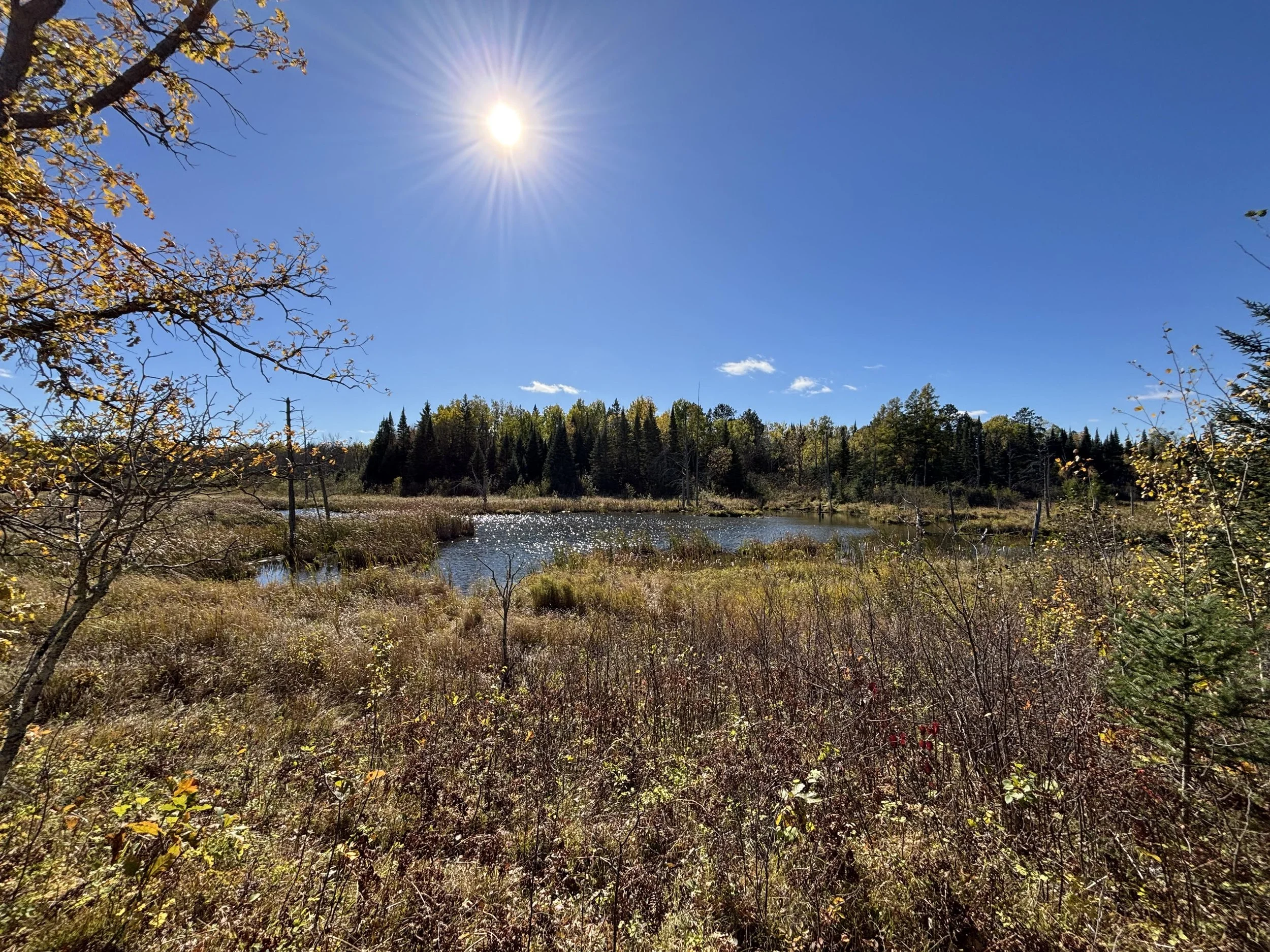
The spring-fed pond on our Northern Minnesota property where the beavers have their lodge.
To truly steward a place, we must see it through a wider context, recognize the ever-changing nature of that place, and honor who/ what beings stewarded the land before. Indigenous peoples across what is now Minnesota have lived sustainably and in relation to all beings here long before colonialism and the advent of Western forestry and land management. Listening to and incorporating Indigenous ways of knowing into our own interactions with the land is not only respectful—it’s practical, rooted in generations of lived experience with this specific landscape.
In “Coming Full Circle: Indigenous Knowledge, Environment, and Our Future,” Anishinaabe scholar Deborah McGregor describes Indigenous Knowledge as “the expression of the vibrant relationships between people, their ecosystems, and other living beings and spirits that share their lands.” She emphasizes that principles such as respect, coexistence, cooperation, honor, thanksgiving, reciprocity, balance, and harmony—and an understanding of the interconnections among all of Creation—are not just teachings, but foundations for living well. (McGregor, 2004)
This philosophy is especially relevant today—as we see ecosystems failing to climate change—and offers an important guide for anyone who stewards land. When we shift our perception from “managing resources” to “living in relationship,” we begin to care differently for the places we love. We start to recognize the full web of life on our land—including beings like Beaver—and we understand that a thriving forest depends on the health of every member of that web. Recognizing, facilitating, and celebrating all life and its interconnections make us better stewards overall.
One of the only wild beavers I've ever seen, spotted on a walk along the Mississippi in Northeast Minneapolis.
Quechua scholar Dr. Elizabeth Sumida Huaman offers another way to think about this. She describes Indigenous research—and by extension, the concepts of learning and stewardship—as a responsibility to place, people, nation, and earth beings, all carried out “in the service of life.” (Huaman, 2024) She then writes, “We seek to know for love—because we love, because we are loved. If understanding is love, what is your love?”
This question sits at the heart of stewardship. Most of us steward land because we love it—because a place has touched us, sustained us, taught us, held our families. If stewardship begins with love, then that love should extend to all the beings who shape that place.
Beavers are not pests, nuisances, or woodland adversaries; they are part of the beating heart of the landscape and are, in fact, active creators and stewards of the places we love. Be creating and caring for these places, beavers are in turn caring for us.
Building Resiliency, One Dam at a Time
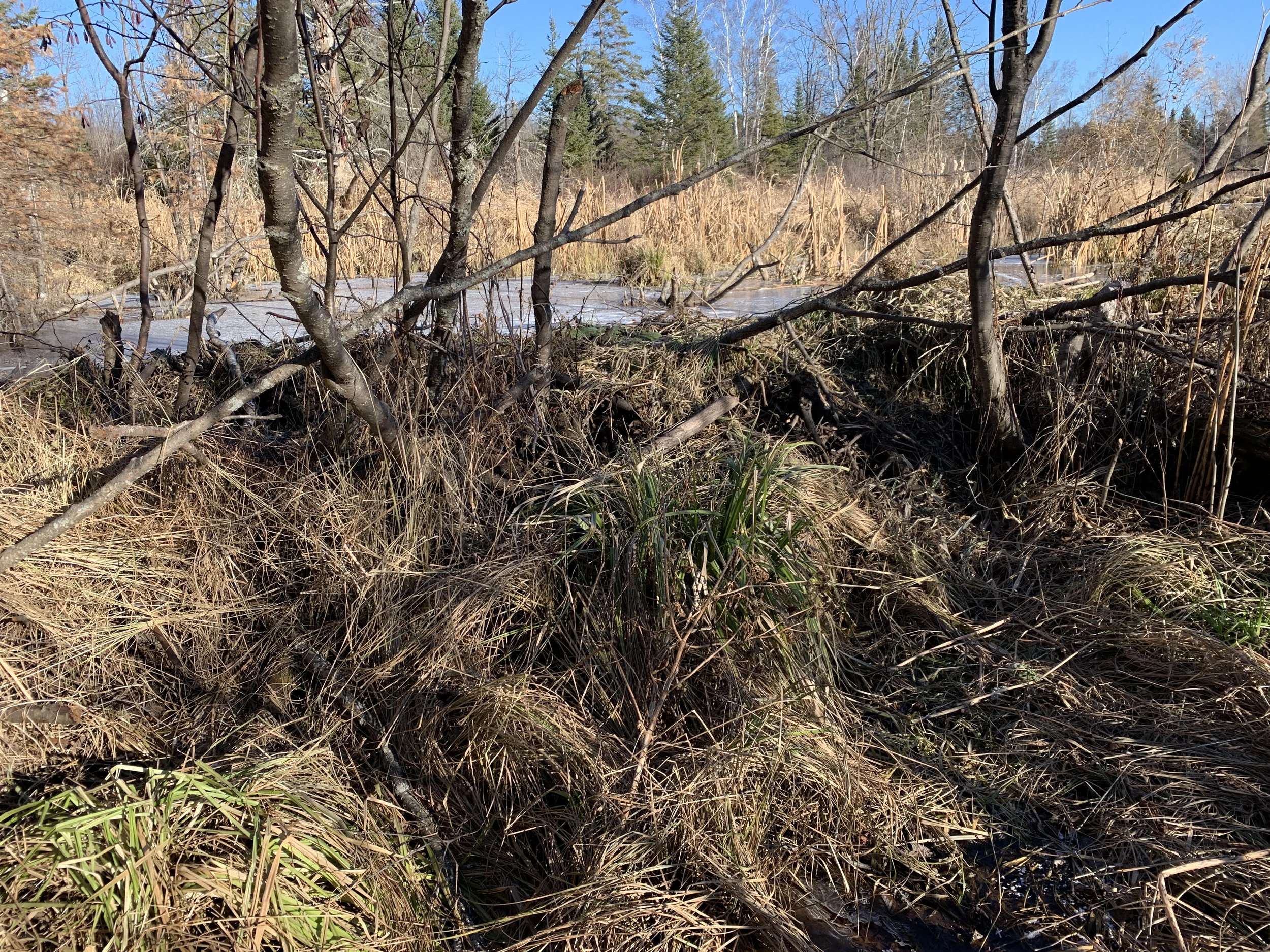
One of their many dams on our pond, frozen in winter.
Beavers, North America’s largest rodent, are a vital keystone species that build more than just dams—they reshape entire ecosystems in ways that make forests, waters, and wildlife more resilient. Their engineering slows water down, spreads it out, brings life back to places that have degraded, and facilitates robust and complex ecosystems that allow multitudes of species to thrive. According to The Beaver Restoration Guidebook (Pollock et al., 2018):
They hold water on the land.
Beaver dams store water like natural sponges. They raise water tables, keep streams flowing longer into dry seasons, and help landscapes withstand drought. Wet meadows and ponds created by beavers act as stable water sources for plants, fish, wildlife, and people.
They reduce floods and erosion.
By slowing down fast-moving water, beaver dams soften the impact of heavy rains. Instead of one big destructive rush downstream, water spreads across the floodplain, reducing erosion and protecting soil.
They expand and diversify habitat.
Where beavers build, life proliferates. Their ponds create a mosaic of slow- and fast-water habitats, wetlands, marsh edges, and beaver meadows. This diversity supports far more plant and wildlife species than a single, narrow stream channel.
They recharge groundwater.
By spreading water out across floodplains, beaver dams help refill underground aquifers. Higher water tables sustain wetland plants, improve soil moisture, and support healthier forests.
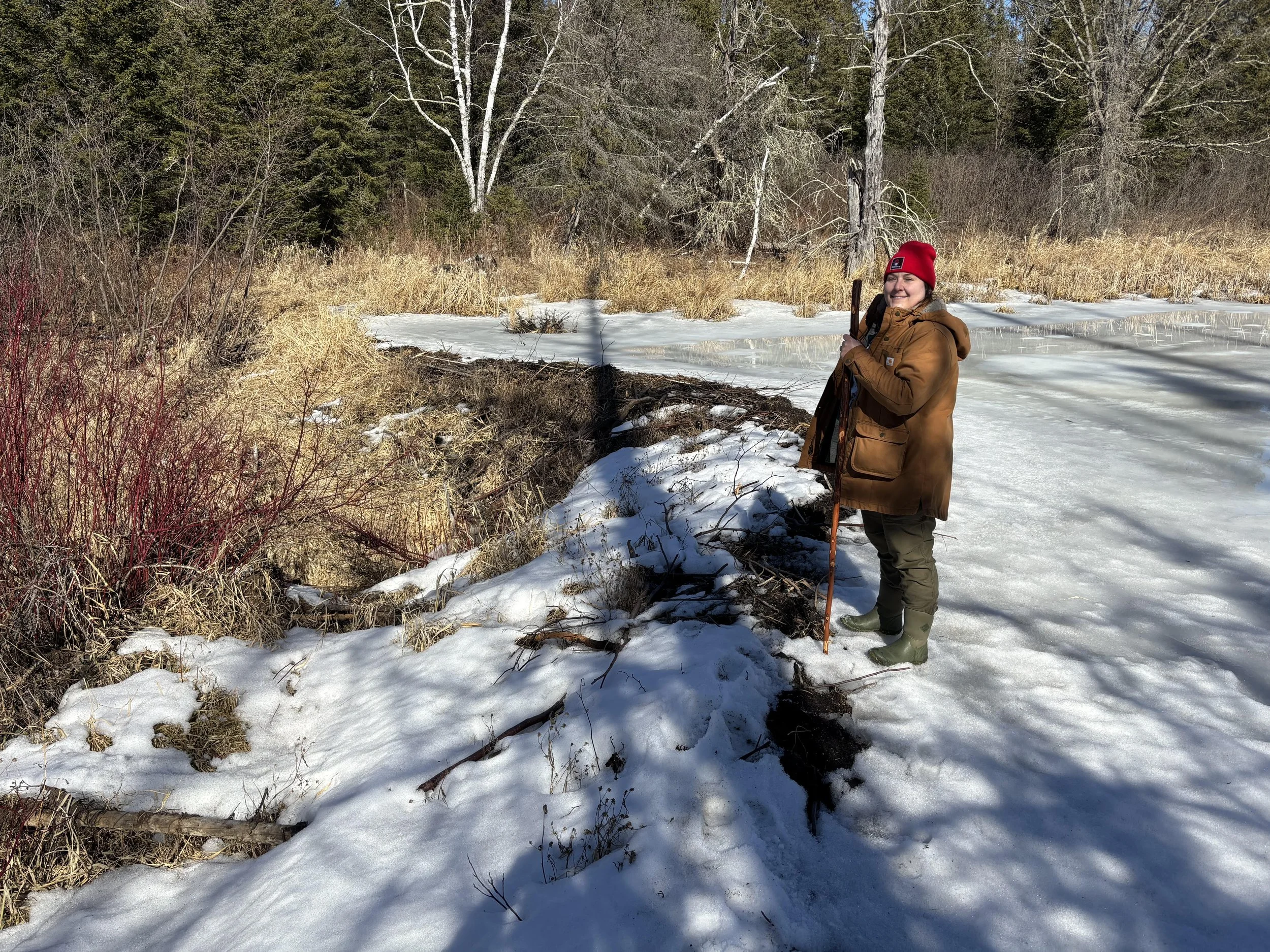
Winter is a great time to explore our beaver neighbors' engineering.
They trap sediment and stabilize channels.
Dams catch sediment that would otherwise wash downstream, helping rebuild streambeds and reconnect rivers to their floodplains. This stabilizes waterways and prevents deep erosion.
They boost biodiversity.
Beaver-created wetlands are hotspots of life. Their ponds support rich plant communities, abundant insects, productive food webs, and ideal habitat for fish—including juvenile salmonids—along with amphibians, reptiles, and countless bird species.
They improve water quality.
Beaver wetlands act as natural filters. They trap sediment, moderate water temperatures, cycle nutrients, and help remove excess nitrogen and other pollutants. The result is cleaner, cooler, more oxygen-rich water downstream.
They reshape land for the better.
Beavers raise streambeds, create side channels, and reconnect rivers with their floodplains. This complexity makes ecosystems more resilient to droughts, fires, floods, and climate change.
Living in Relation with Challenging Neighbors
Considering their far-reaching benefits, it can be tempting to oversimplify beavers as an eco-hero, but it’s never that easy. Beavers don’t follow management plans and are often in direct conflict and competition for space with humans. A recent discussion in Geoforum by Caroline Gottschalk Druschke and colleagues (2024) offers an important reminder for anyone thinking about beavers and restoration: beavers are not quick fixes or tools to be deployed. They are living, autonomous beings with their own needs, rhythms, relationships, and ways of shaping a place—and in ways that don’t revolve around human desires or expectations.
Recognizing this complexity is essential for good stewardship. Indigenous Knowledge offers crucial guidance here, reminding us that humans are part of a web of relationships with land, water, and more-than-human relatives, like Beaver. Living with beavers means learning from beavers, accepting that nature is dynamic and that change is part of a healthy landscape, not a failure of management.
Rather than asking beavers to fit our expectations, we can learn to adapt our expectations to the natural systems we’re part of. By respecting the agency of beavers, guided by Indigenous Knowledge, we become better stewards. We learn to care for a place not by controlling every outcome, but by supporting the conditions that allow beavers, waters, forests, people, and other creatures to all thrive together.
Sharing a Place and Mitigating Neighborly Conflict
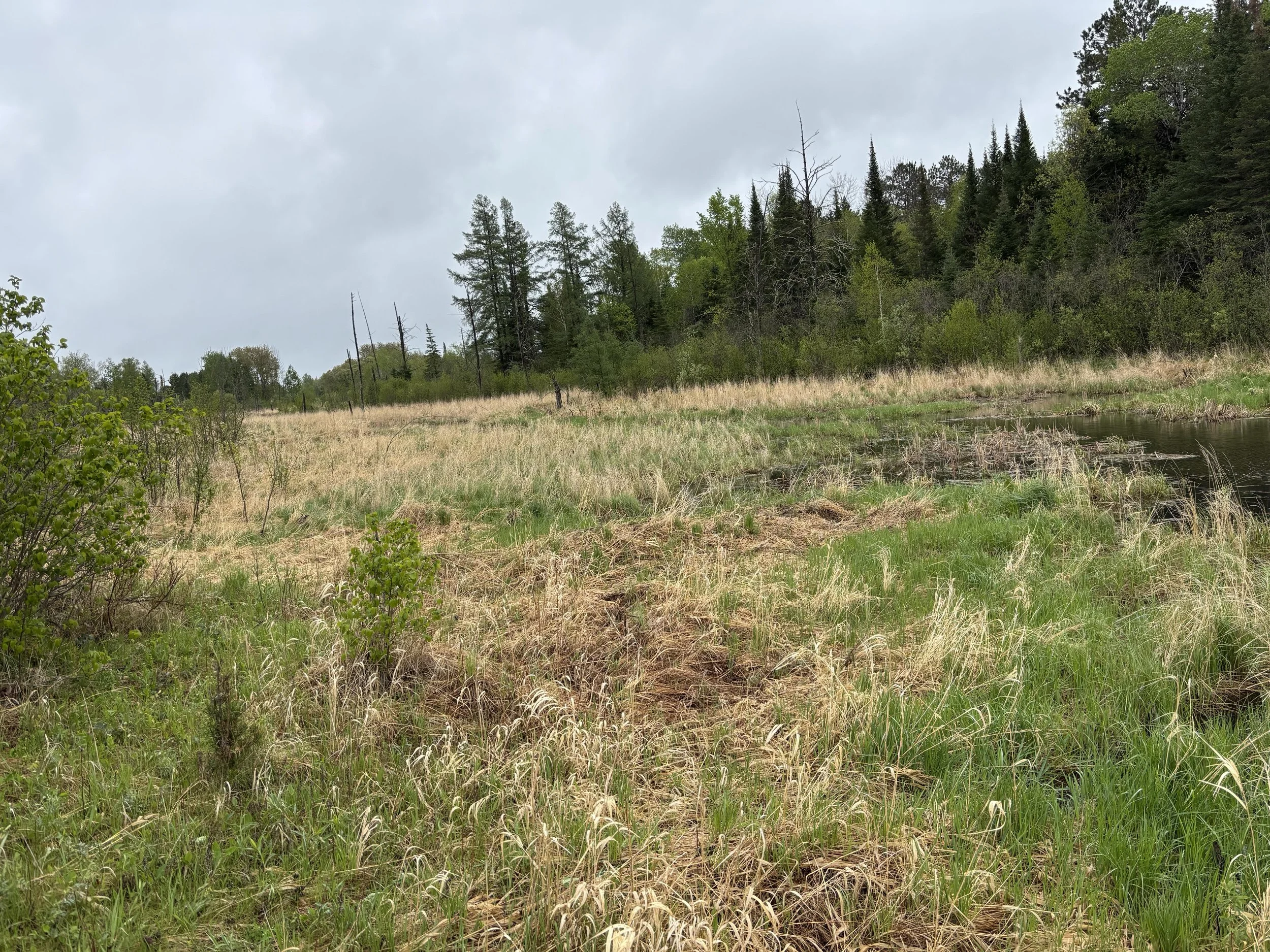
The riparian zone along the creek that flows from the beaver pond.
Living in a community comes with its own challenges, and sometimes our neighbors can frustrate us. The same is true when sharing the land with beavers—as in the story of Nanabush and the Great Beaver, conflict can arise. Beavers may flood a low-lying area, chew on prized trees, or alter a pond in ways that feel disruptive. In Minnesota on non-tribal land, it’s illegal to trap and relocate beavers (Minnesota Department of Natural Resources, n.d.), which leaves lethal removal as the default “solution.” But positioning beavers as neighbors and ecosystem allies necessitates a different approach.
By changing our perspective, we can also change our mitigation strategies—treating beavers not as nuisances to be eliminated, but as partners whose needs can be balanced with human priorities. Practical, non-lethal strategies exist and are increasingly used across Minnesota and beyond. For example, the Beaver Institute offers solutions such as tree protection wraps, pond levelers, and culvert protection devices that allow beavers to work without flooding roads or properties. (Pollock et al., 2018) Similarly, Beaver Innovations, a Minnesota-based start-up, designs and implements site-specific beaver management plans using flow devices, fencing, and habitat modification, keeping beavers on the landscape while reducing conflicts. (Beaver Innovations, n.d.)
These methods show that coexistence is possible. By investing in strategies that respect beaver agency, we support both the health of the landscape and the long-term benefits beavers provide—wetlands, biodiversity, and resilient ecosystems—while maintaining human uses of the land. Living with beavers must include learning to share space in a way that honors all community members, human and non-human alike.
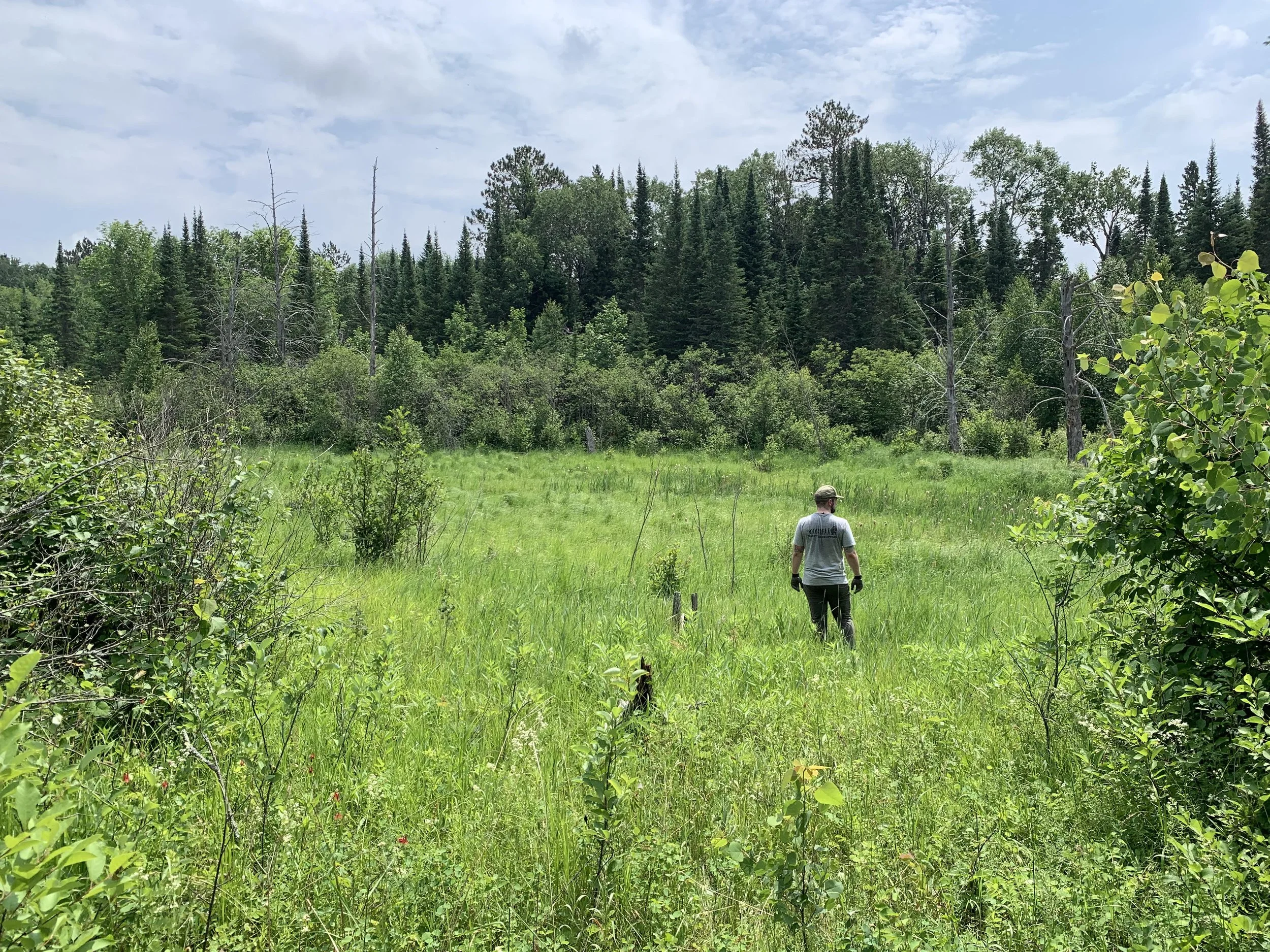
The lush riparian zone facilitated by our beaver neighbors.
Healing and Sustaining Indigenous Landscapes
Recognizing the ecological and cultural significance of Beaver can foster better relations between people, beavers, lands, and waters. Accepting beavers as autonomous neighbors validates Indigenous world views and is a step toward respecting Indigenous ontologies rather than treating Traditional Ecological Knowledge as a tool to be applied or a box to check. Encouraging reciprocal relationships with Beaver also supports Indigenous wellbeing and cultural continuity—as well as wider communal, place-centric wellbeing and continuity—through the continual presence of beavers on the landscape, beaver-shaped ecosystems, and the resulting ecological and climate resilience.
Reframing beavers as respected community members rather than nuisances can support Indigenous sovereignty, cultural resurgence, and the long-term health of the lands and waters that Indigenous peoples depend on. For Anishinaabe, Ojibwe, and Dakota communities in Minnesota, beaver-shaped wetlands are not incidental features—they are living parts of a cultural landscape that sustain manoomin (wild rice) (Ojibwe People’s Dictionary, n.d.), native fisheries, medicinal plants, and the water systems that uphold spiritual and communal well-being. When beavers are removed, these relationships weaken; when beavers are allowed to resume their ecological roles, communities experience a small but meaningful return to more trareciprocal forms of land stewardship.
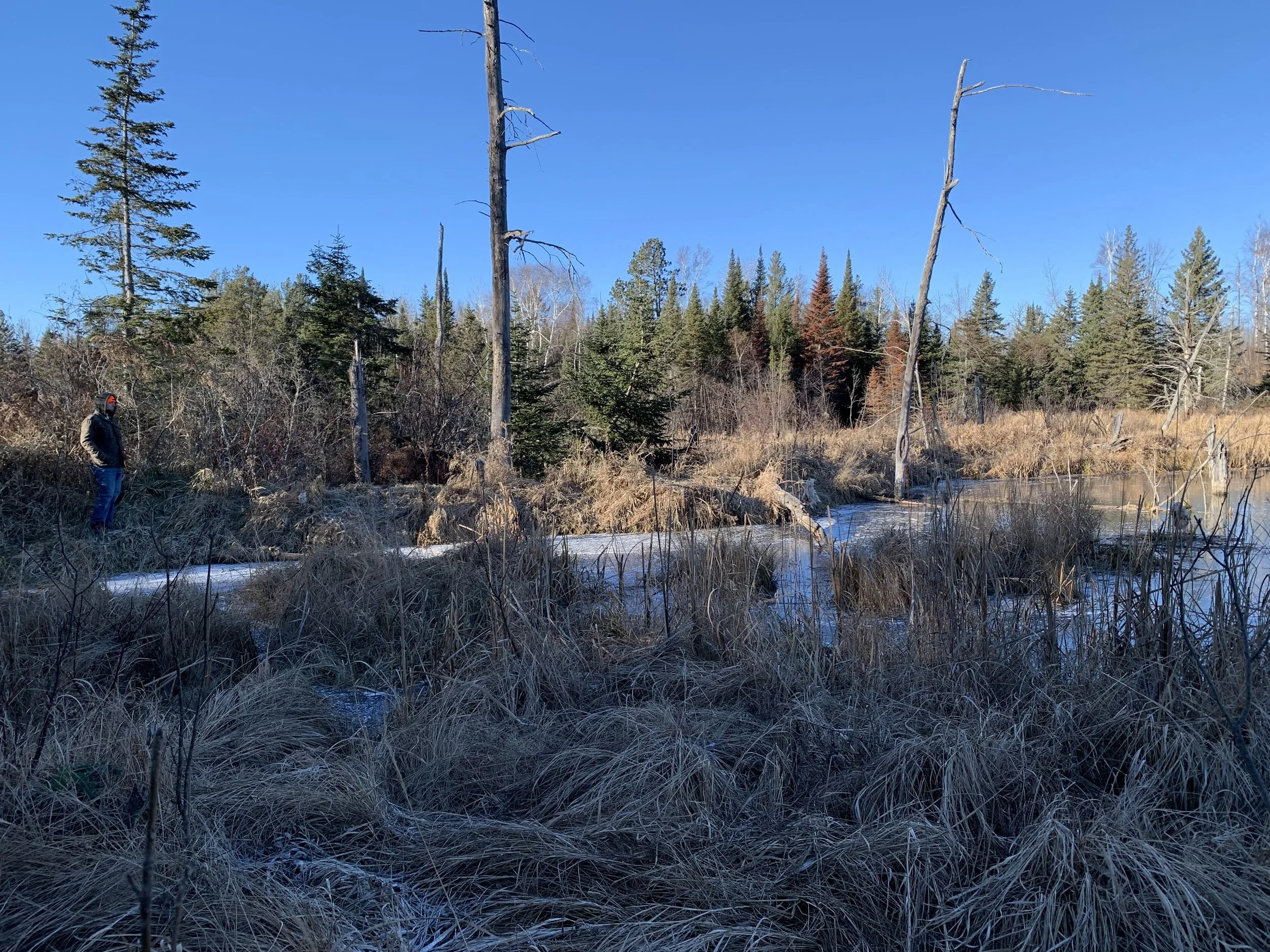
The southern-most portion of the property is not permanently accessible—we’ve only been able to walk it once when one of the main dams momentarily created a bridge.
Gratitude for the World Builders
Beavers themselves are autonomous beings with inherent worth and a rightful place in the world, facilitating and supporting vast communities that depend on beaver engineering. Restoring acceptance of beavers strengthens the entire living network of a place—its waters, forests, soils, and the countless beings whose lives and futures are intertwined.
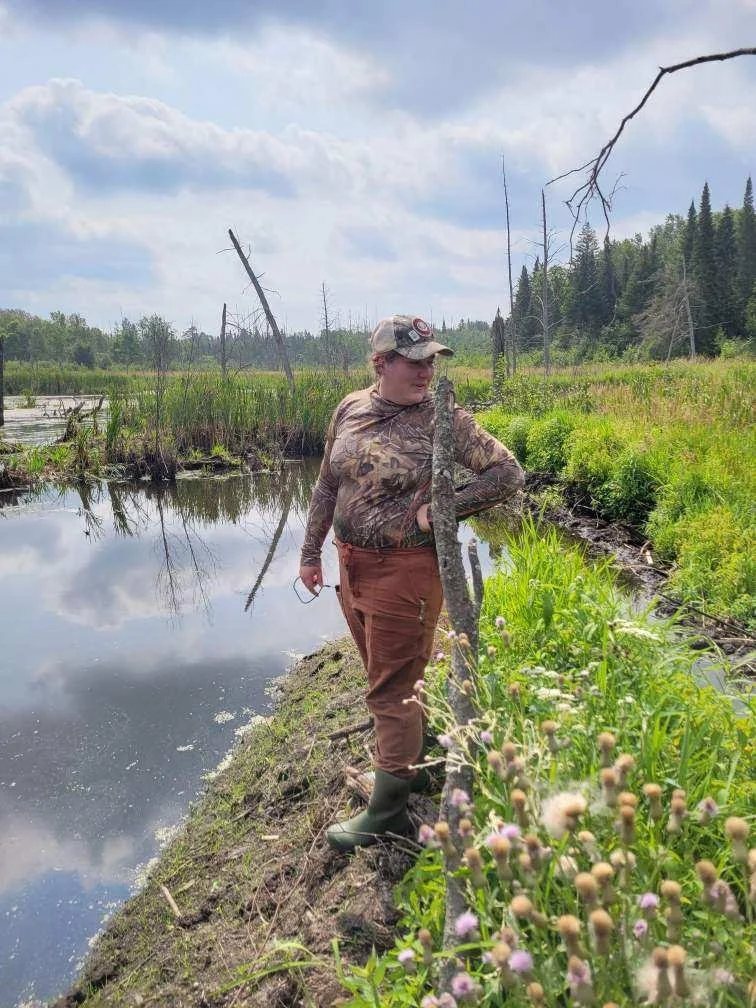
Standing on one of the beaver dams in spring when the water was particularly low.
As a landowner and forest steward, I am thankful for the beaver family on our property. I see them as an incredible asset to the place that we are now a part of. They make the ecosystem exponentially more diverse and dynamic. Our enjoyment and use of the land through recreation, spiritual connection, foraging, and hunting is improved by and because of the beavers’ presence. I regularly check on their “beaver business,” following their trails to see what copse of poplar they’re gnawing, and collecting their amiko-biiwanjigan, the little bites of wood left behind from their chewing (Ojibwe People’s Dictionary, n.d.), like magical woodland talismans.
I see them as mysterious teachers. They just strike me as furry pond Yodas from Star Wars—driven and assured creatures, very steady and thinking in the long term—their work and ways of being stretching across generations, shaping the land and sustaining beings in ways that outlast any single lifetime. Their legacy serves entire communities and sustains far beyond their own needs. Beavers remind me that lasting change often happens slowly and quietly, through persistence and care rather than force and fanfare.
Now for something slightly less formal that reflects my feelings on the matter quite aptly. (This was NOT included in my final.)
Works Cited
Beaver Innovations. (n.d.). Innovative solutions for beaver management challenges. Retrieved December 12, 2025, from https://beaverinnovations.com/
CBC Radio. (n.d.). The brilliance of the beaver: Learning from an Anishinaabe world [Audio broadcast]. CBC. Retrieved November 28, 2025, from https://www.cbc.ca/radio/ideas/the-brilliance-of-the-beaver-learning-from-an-anishnaabe-world-1.5534706
Environment Office | Saugeen Ojibway Nation. (2021, March 15). Nanabush and the Giant Beaver [Video]. YouTube. https://www.youtube.com/watch?v=-ct2D8jClg0
Gottschalk Druschke, C., Booth, E. G., Demuth, B., Holtgren, J. M., Lave, R., Lundberg, E. R., Myhal, N., Sellers, B., Widell, S., & Woelfle-Hazard, C. A. (2024). Re-centering relations: The trouble with quick fix approaches to beaver-based restoration. Geoforum, 156, 104121. https://doi.org/10.1016/j.geoforum.2024.104121
McGregor, D. (2004). Coming full circle: Indigenous knowledge, environment, and our future. American Indian Quarterly, 28(3/4), 385–410. http://www.jstor.org/stable/4138924
Minnesota Department of Natural Resources. (n.d.). Beavers: Living with wildlife. Retrieved December 12, 2025, from https://www.dnr.state.mn.us/livingwith_wildlife/beaver/index.html
Ojibwe People’s Dictionary. (n.d.). Ojibwe People’s Dictionary. University of Minnesota. Retrieved December 12, 2025, from https://ojibwe.lib.umn.edu/
Pollock, M. M., Lewallen, G., Woodruff, K., Jordan, C. E., & Castro, J. (Eds.). (2018). The Beaver Restoration Guidebook: Working with beaver to restore streams, wetlands, and floodplains (Version 2.01). U.S. Fish and Wildlife Service. https://www.beaverinstitute.org/wp-content/uploads/2023/03/The-Beaver-Restoration-Guidebook-v2.01.pdf
Sumida Huaman, E. (2024). Kawsaypaq (for life): Indigenous research for the freedom to become. International Journal of Qualitative Studies in Education, 1–13. https://doi.org/10.1080/09518398.2024.2318291